Mia Coleman · 20 September 2026
University Collaborations Forge New Paths in Simulating Atmospheric Effects on Quantum Light Transmission
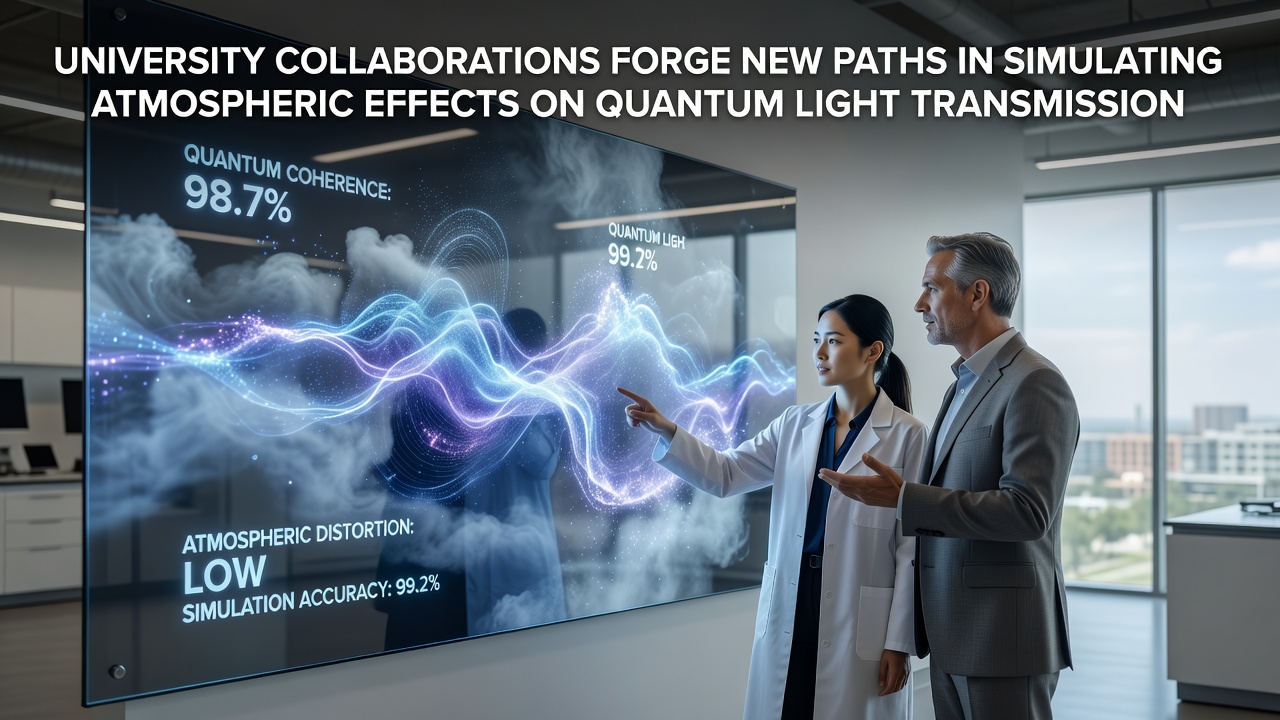
University teams across several continents have expanded joint efforts to model how atmospheric conditions influence the behavior of quantum light during transmission and data shows these collaborations rely on shared computational frameworks that integrate turbulence models with quantum optics equations. Researchers at institutions in North America and Europe combine high-resolution atmospheric data with photon-level simulations to predict signal degradation over long distances while studies published in 2025 highlight improvements in accuracy when multiple groups contribute specialized algorithms for absorption and scattering effects.
Atmospheric turbulence creates phase distortions that disrupt entangled photon pairs and single-photon sources used in quantum networks, yet new simulation platforms now account for varying humidity levels, aerosol distributions, and temperature gradients simultaneously. Data from joint projects indicate that earlier single-institution models underestimated decoherence rates by up to 30 percent in certain wavelength bands, prompting teams to merge datasets from ground-based observatories with satellite measurements. One collaboration involving physicists from Warsaw and Boston developed a modular software suite that lets users adjust parameters for different altitudes and weather patterns without rewriting core quantum propagation code.
Shared Computational Tools Drive Progress
Teams exchange open-source modules that handle beam propagation through layered atmospheric profiles, and these tools incorporate real-time meteorological inputs from global sensor networks. Evidence from recent benchmarks reveals that combined models achieve closer alignment with experimental field tests conducted at mountain observatories and desert sites. Observers note that September 2026 marks the scheduled release of an updated simulation package incorporating machine-learning corrections derived from thousands of hours of joint measurement campaigns.
Engineers integrate finite-difference time-domain methods with Monte Carlo photon tracking to capture both classical wave effects and discrete quantum events, while cross-institutional working groups standardize input formats so results remain comparable across different supercomputing facilities. Figures released by participating labs show reduced variance in predicted fidelity rates when multiple turbulence spectra are averaged together.
Case Examples from Ongoing Projects
Take one group that paired atmospheric chemists with quantum information theorists to simulate 1550-nanometer photons traveling through cirrus clouds and their findings demonstrate how ice-crystal orientation alters polarization preservation over 50-kilometer paths. Another effort links researchers in Australia with counterparts in Canada to examine how wildfire smoke plumes affect quantum key distribution links and preliminary outputs suggest adaptive optics corrections can recover significant portions of lost entanglement. These projects feed into larger testbeds where simulated outputs guide hardware adjustments before physical deployment.
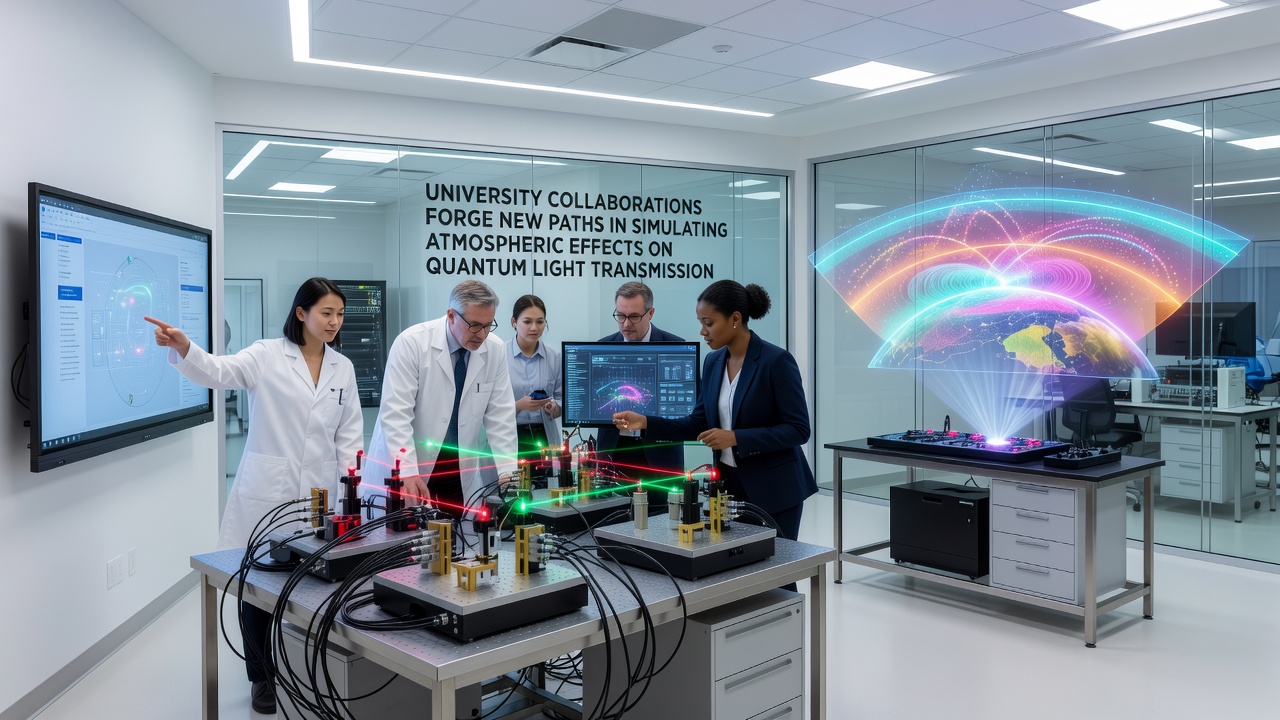
Funding agencies on both sides of the Atlantic have supported these exchanges through dedicated calls that require international co-investigators, and progress reports indicate steady growth in shared publications since 2023. Data compiled by the European Research Council shows increased citation rates for papers listing authors from at least three different countries compared with single-nation efforts in the same field.
Validation Against Real-World Measurements
Researchers validate simulation outputs against data collected from free-space optical links operating between university campuses and remote stations, then refine parameters when discrepancies appear. One study compared predicted versus measured coincidence rates for entangled photons sent across a 20-kilometer urban path during varying wind conditions, and the results prompted adjustments to the inner-scale turbulence parameter used in the models. Such iterative loops between theory and experiment continue to tighten agreement, according to summaries presented at recent optics conferences.
Software interfaces now allow remote users to upload local weather station readings and receive customized transmission forecasts within minutes, while documentation emphasizes compatibility with standard quantum optics libraries. Those who have adopted the platforms report faster iteration cycles when testing new encoding schemes under realistic channel conditions.
Future Directions and Scheduled Milestones
Plans for the coming year include expansion of the simulation grid to cover satellite-to-ground links where atmospheric effects combine with orbital motion, and joint teams aim to release validation datasets from coordinated measurement campaigns. September 2026 will feature a dedicated workshop where participants present comparative results from different atmospheric regimes and discuss standardization of output metrics. Additional partnerships are under discussion with groups focused on underwater quantum channels, which share similar modeling challenges involving scattering media.
Academic institutions continue to host visiting researchers who bring expertise in specific atmospheric phenomena or numerical methods, and these exchanges accelerate integration of new modules into the shared codebase. Reports from funding bodies indicate sustained support for such initiatives through 2027.
Conclusion
University collaborations have produced increasingly detailed simulations that capture how atmospheric variables influence quantum light transmission, and ongoing work integrates diverse data sources with advanced computational techniques. Scheduled updates and measurement campaigns through September 2026 promise further refinements as teams refine models against field observations. The combined efforts continue to support development of robust quantum communication systems capable of operating under variable environmental conditions.