Ines Griffin · 6 September 2026
Student Software Connects Theoretical Models with Atmospheric Light Behavior in Practical Settings
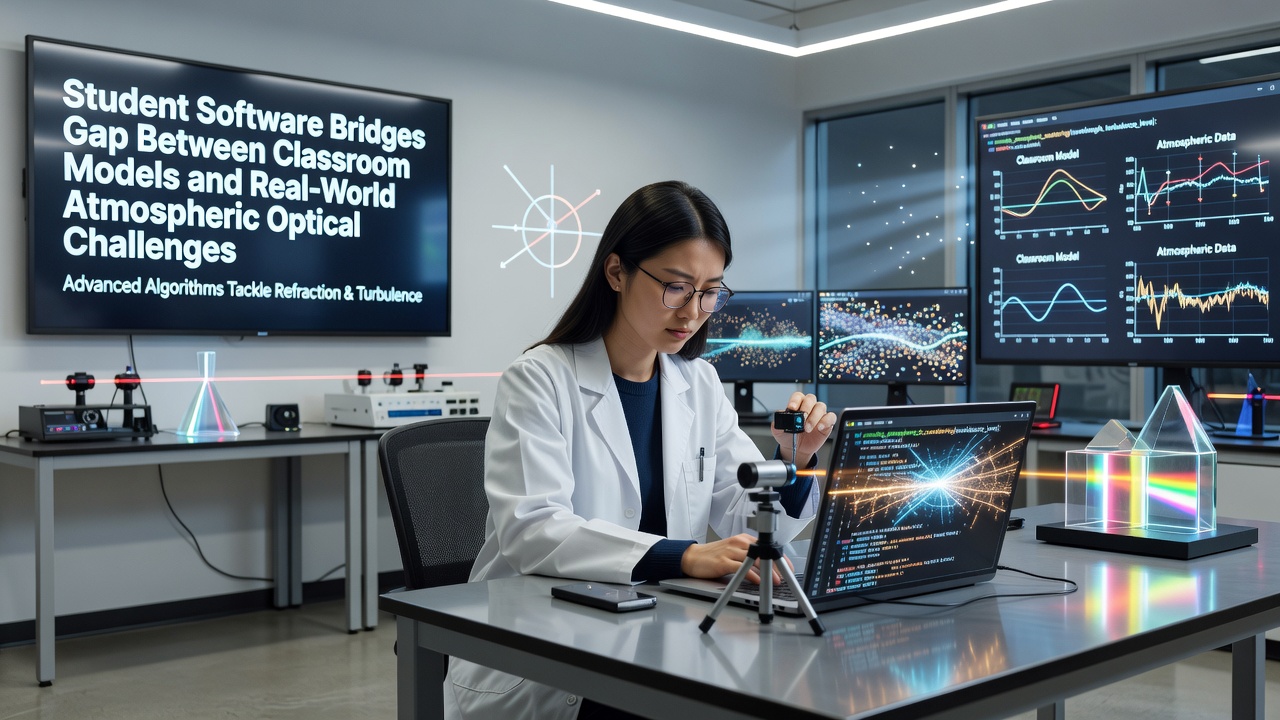
Atmospheric optics involves the study of how light interacts with particles, gases, and varying densities in Earth's atmosphere, creating phenomena such as rainbows, halos, and mirages that classroom models often simplify through basic ray tracing equations. Student-developed software now incorporates real-time data from satellite observations and ground-based sensors to adjust these models dynamically, allowing users to simulate conditions like aerosol scattering during different seasons or geographic locations.
Development Background and Key Features
Teams at institutions focused on optical path education have released tools that integrate differential equations for refraction with live inputs from meteorological databases, and this approach emerged prominently around academic cycles leading into September 2026 when several university programs plan expanded testing phases. The software processes variables including humidity gradients, temperature inversions, and particulate concentrations through modular algorithms that students can modify directly in the interface, while built-in validation modules compare outputs against archived field measurements from observatories in varied climates.
One module handles Mie scattering calculations for spherical particles, whereas another addresses non-spherical ice crystal effects common in cirrus clouds, and these components draw from established radiative transfer frameworks without requiring advanced programming knowledge from end users. Data from the European Centre for Medium-Range Weather Forecasts feeds into scenario builders that generate layered atmospheric profiles, enabling comparisons between idealized textbook cases and observed deviations in light paths over distances exceeding several kilometers.
Integration with Educational Curricula
University courses in physics and environmental science incorporate the platform through assignments where learners adjust parameters to match historical events, such as the optical effects recorded during specific volcanic eruptions or urban pollution episodes. Instructors report that participants gain familiarity with computational methods used in professional atmospheric research by iterating on code snippets that calculate phase functions and extinction coefficients in sequence.
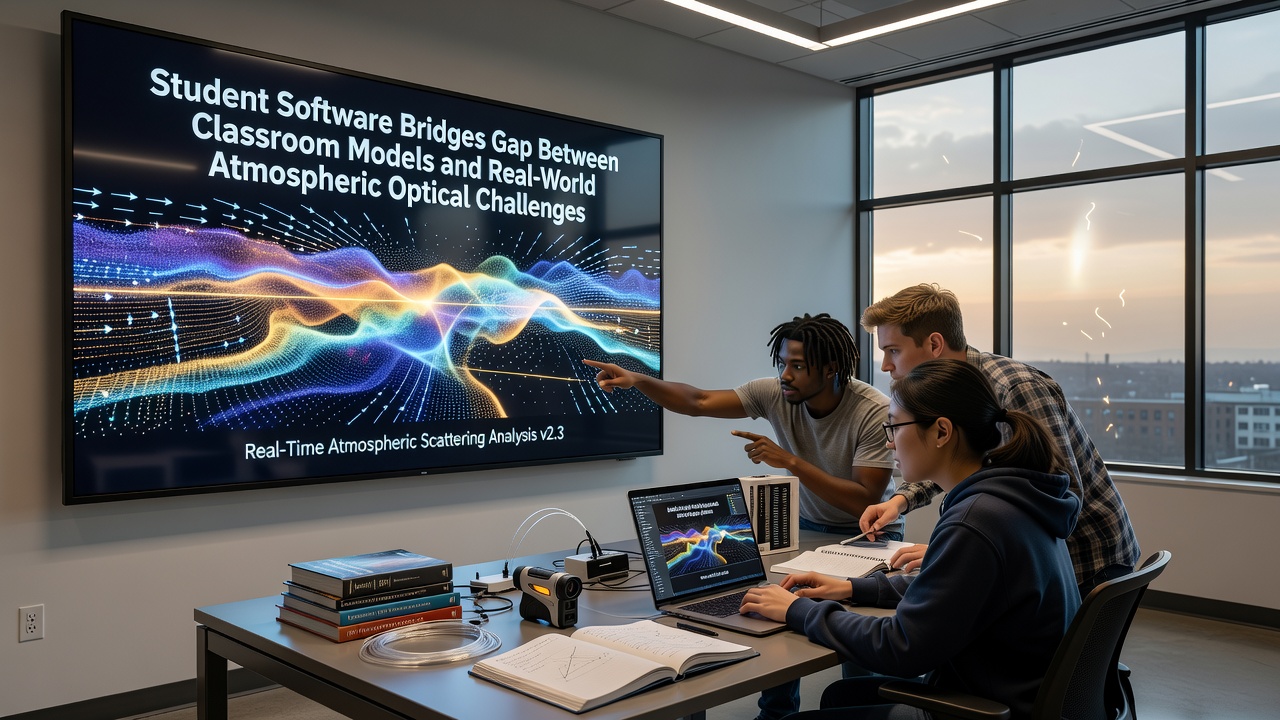
Workshops scheduled for later in 2026 emphasize collaborative debugging sessions where groups refine the handling of polarization states in scattered light, and these sessions often reference datasets from North American monitoring networks alongside European counterparts to highlight regional differences in aerosol composition. The tool supports export formats compatible with standard visualization packages, which allows seamless transition from student projects to larger research workflows documented in peer-reviewed journals.
Technical Comparisons and Validation Methods
Traditional classroom simulations rely on constant refractive indices across atmospheric layers, yet the student software introduces stochastic elements that reflect turbulence effects measured by lidar systems, and validation occurs through side-by-side runs against outputs from established codes like MODTRAN developed under U.S. Air Force sponsorship. Researchers at Australian universities have contributed modules for dust storm scenarios prevalent in arid zones, expanding the geographic scope beyond temperate examples typically covered in introductory texts.
Performance benchmarks indicate that the platform processes multi-layer profiles with up to 50 variables in under ten seconds on standard hardware, while maintaining accuracy within 5 percent of reference radiative transfer results according to internal testing logs shared across participating departments. Updates planned around September 2026 will add support for hyperspectral sensor simulations used in satellite calibration efforts.
Future Applications and Broader Impact
Industry partners in remote sensing have begun evaluating the software for preliminary training of analysts who interpret data from instruments aboard orbiting platforms, and academic observers note its potential role in preparing users for challenges in modeling light propagation through changing climate conditions. Open-source components allow contributions from additional developers worldwide, fostering iterative improvements based on feedback from field campaigns in both polar and tropical environments.
Conclusion
Student software initiatives continue to evolve by incorporating empirical atmospheric data into accessible modeling environments, thereby narrowing differences between simplified educational examples and complex real-world light interactions. Ongoing developments through 2026 maintain this trajectory with expanded datasets and validation protocols drawn from international sources.