Greta Hoffmann · 2 September 2026
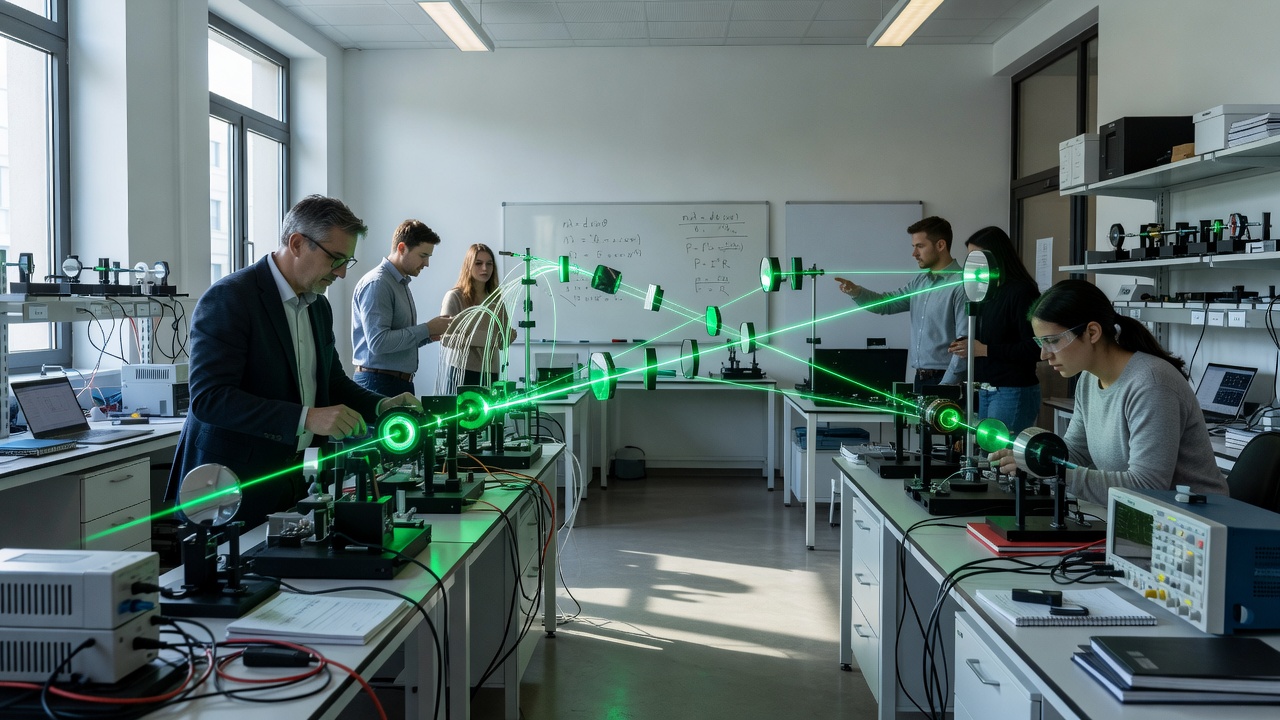
The European Union has announced a major funding initiative aimed at bolstering optical path research conducted at universities throughout member states. This program seeks to foster innovation in the study of light propagation, which has significant implications for multiple technological sectors including telecommunications, sensing, and imaging systems.
Allocation of Funds to Key Institutions
Grants amounting to 20 million euros have been distributed among institutions such as the University of Warsaw, Technical University of Munich, and Sorbonne University in Paris. These funds will enable the purchase of advanced laser systems and computational tools necessary for simulating complex optical paths. Research teams will investigate phenomena like refraction, diffraction, and dispersion in novel materials. The projects emphasize interdisciplinary approaches combining physics, engineering, and computer science. Training workshops for postgraduate students are also planned to build expertise in optical path analysis. Over the next four years, participants will publish findings in peer-reviewed journals and present at international conferences. Additional resources support equipment calibration and data analysis software development to ensure accurate measurements of photon trajectories under varied conditions.
Potential Impacts on Technology and Science
The anticipated results include improved designs for optical fibers that minimize signal loss over long distances. Such advancements could enhance global communication networks and support the development of quantum computing interfaces. Furthermore, applications in biomedical fields may improve non-invasive imaging techniques for early disease detection. The collaborative nature of the program promotes knowledge exchange across borders, strengthening Europe's position in photonics research. Regular progress reports will be submitted to EU oversight bodies to maintain accountability and maximize scientific output from the investments. Long-term benefits are expected in sustainable energy solutions using optimized light paths for solar concentrators and environmental monitoring sensors.