Sam Simon · 18 October 2026
Classroom Apps Decode How Weather Alters Photon Routes in Eastern European Fiber Links
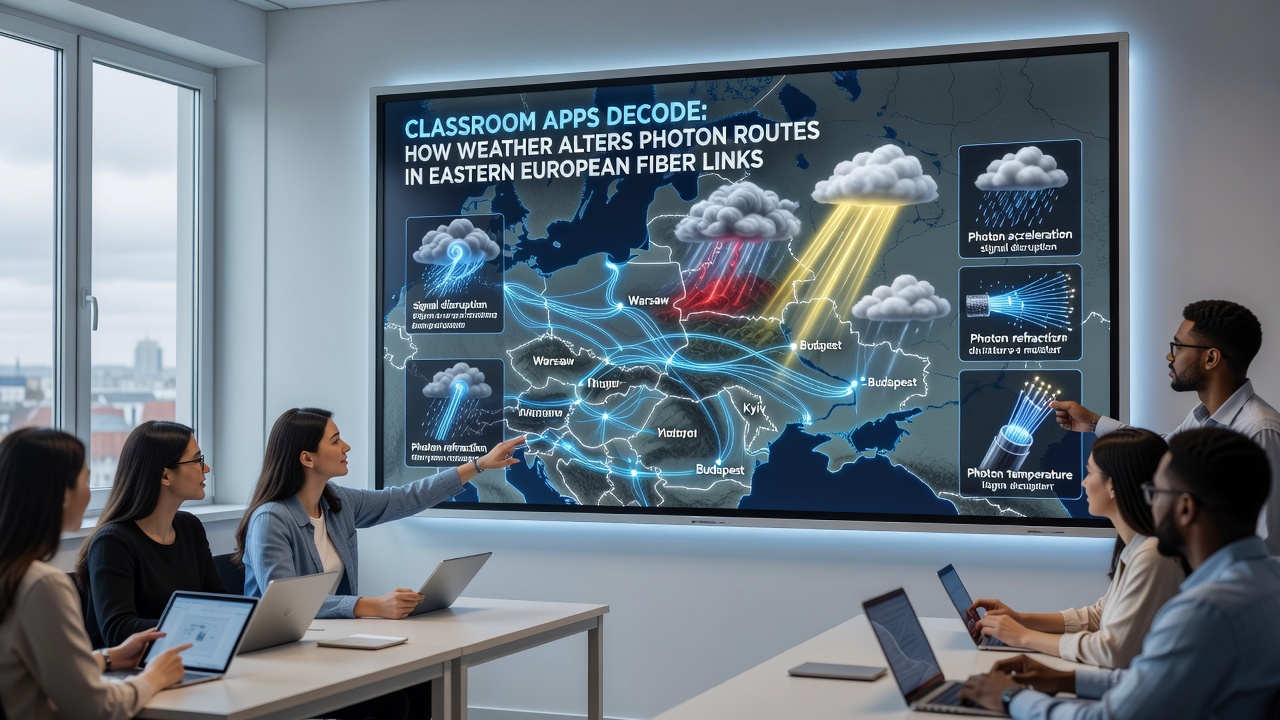
Weather conditions across Eastern Europe influence photon behavior in fiber optic networks through mechanisms such as scattering and absorption that alter transmission paths, and classroom applications now allow students to simulate these interactions with data from regional links. Researchers have documented how precipitation, temperature fluctuations, and atmospheric pressure changes affect signal integrity in cables spanning Poland, Hungary, and neighboring countries, while educational software integrates real-time meteorological inputs to trace photon deviations along these routes.
Understanding Photon Dynamics in Fiber Infrastructure
Fiber links in Eastern Europe carry photons that encounter variable environmental factors, and studies from 2024 onward show increased attenuation during heavy rainfall periods in areas like the Carpathian region. Classroom apps break down these processes by modeling how water droplets refract light particles, which leads to measurable path shifts without requiring physical lab equipment. Data from monitoring stations along the Budapest-Warsaw corridor indicate that fog events can extend photon travel times by up to several microseconds per kilometer, and the software visualizes these delays through interactive diagrams that update based on archived weather records.
Students input variables such as humidity levels and wind speeds into the applications, which then calculate corresponding adjustments in photon trajectories using established equations from optical physics. This approach connects theoretical models with observed outcomes from deployed fiber segments, and analysts note that such tools have expanded access to complex simulations previously limited to specialized research facilities.
Integration of Regional Data and Simulation Features
Eastern European fiber networks span diverse terrains where seasonal weather patterns create distinct challenges for photon propagation, and apps incorporate datasets from sources including national meteorological agencies to reflect these variations accurately. For instance, summer thunderstorms in the Balkans correlate with temporary spikes in dispersion, while winter ice accumulation on above-ground sections introduces consistent birefringence effects that the programs replicate through step-by-step animations. Users adjust parameters to observe cumulative impacts over multi-hop routes, and the results align with measurements collected during field tests conducted in 2025.
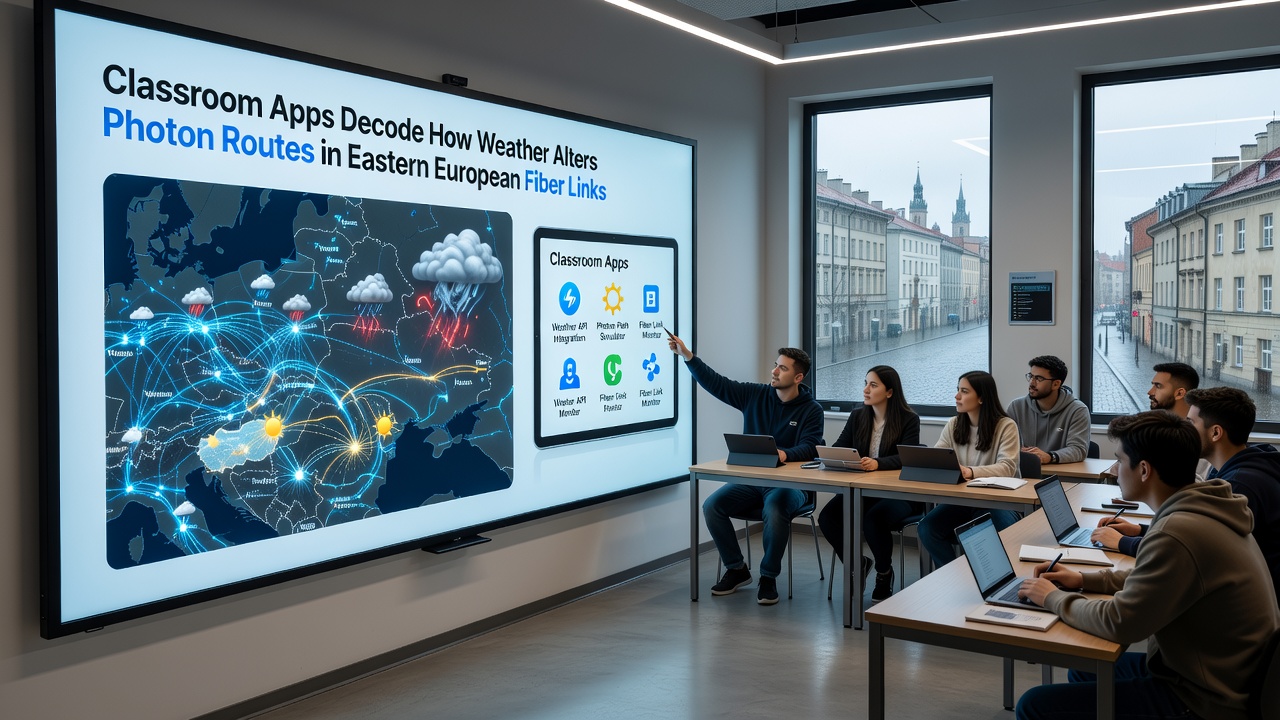
The applications also include modules that compare baseline clear-weather performance against adverse scenarios, which helps illustrate the cumulative nature of environmental interference. Observers report that these comparisons draw from longitudinal records maintained by infrastructure operators, and the software exports summary metrics for further analysis in academic settings. In October 2026 updates to several platforms added support for quantum channel modeling, allowing exploration of how weather-induced noise influences entangled photon pairs over the same Eastern European segments.
Educational Outcomes and Broader Applications
Universities in the region have incorporated these tools into coursework on telecommunications and quantum information science, where participants run scenarios based on actual link performance logs from the past decade. The simulations demonstrate how targeted mitigation strategies, such as adaptive routing protocols, respond to predicted weather events, and the apps generate reports that match empirical findings from collaborative projects involving multiple institutions. Evidence from course evaluations shows improved comprehension of attenuation coefficients when students manipulate variables in real time rather than reviewing static charts alone.
Industry reports from organizations like the European Telecommunications Standards Institute highlight the value of such educational resources in preparing engineers for network maintenance challenges specific to variable climates. European Telecommunications Standards Institute guidelines on fiber performance reference similar environmental modeling techniques, and parallel resources from the National Institute of Standards and Technology provide supplementary data on photon behavior under controlled atmospheric conditions. National Institute of Standards and Technology publications detail measurement protocols that align with the simulation parameters used in the classroom tools.
Future Developments in Simulation Technology
Developers continue to refine these applications by incorporating machine learning elements that predict photon route changes from incoming weather forecasts, which extends their utility beyond static historical data. Eastern European testbeds supply fresh inputs for validation, and the resulting accuracy improvements support advanced coursework on resilient network design. As fiber deployments expand in the region, the role of these decoding tools grows in both academic and professional training contexts.
Conclusion
Classroom applications focused on photon route alterations provide structured access to the interplay between weather and Eastern European fiber infrastructure, supported by verifiable data sources and ongoing technical refinements. The methods enable precise examination of transmission variables without direct field access, and continued integration of regional observations sustains their relevance through 2026 and beyond.